Behind the Locked Door: How Luxury's Most Revered Houses Are Making Transparency the New Exclusivity

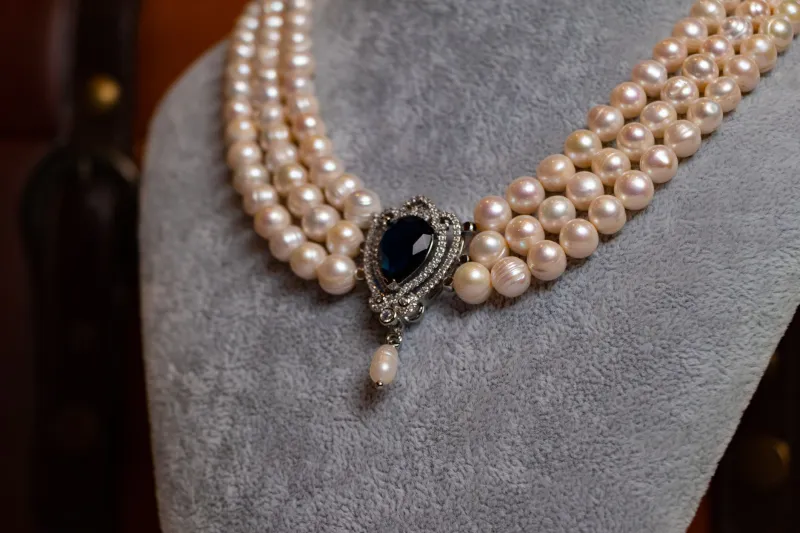
Photo by Photo by Tahlia Doyle on Unsplash on Unsplash
For most of its modern history, luxury operated on a principle of productive mystery. The great houses — whether in Paris, Milan, or Geneva — understood that the distance between the consumer and the creation was itself part of the value proposition. You did not need to know how the piece was made. You needed only to know that it was exceptional, and that not everyone could have it.
That calculus, precise and long-effective, is quietly being rewritten. And the revision, counterintuitively, is making luxury more exclusive than ever.
The Shift Toward Radical Transparency
Across the most rarefied segments of the American luxury market, a notable pattern has emerged over the past several years. Houses that once guarded their ateliers with near-religious discretion are now offering a select tier of clients something they have never offered before: access. Not the democratized, social-media-ready access of the brand awareness campaign, but genuine, substantive proximity to the creative process — studio visits, maker introductions, documentation of the hours and hands that brought a singular piece into being.
This is not, it must be emphasized immediately, a move toward openness for its own sake. The brands engaged in this practice are not inviting the world in. They are inviting the right people in — and the distinction between those two things is everything.
"What we are seeing is not democratization," says a luxury market analyst who advises American collectors and family offices on acquisitions. "It is stratification at a higher level. The new question is not simply 'Can you afford this piece?' but 'Do you understand it well enough to truly possess it?' That is a far more exclusive threshold."
The Atelier as Ultimate Credential
For the collector who has moved beyond the logo — who has already navigated the first tier of luxury fluency and arrived at something more demanding — the question of making has become central. Who cut this stone? How many hours did this setting require? What is the name of the artisan whose hands shaped this clasp?
These are not merely sentimental inquiries. They represent a sophisticated understanding of value that transcends market pricing. A piece made by a named artisan, in a documented process, with a traceable material history, is a fundamentally different object than one without that provenance — even if both carry the same house signature.
Several American collectors interviewed for this piece described the moment of atelier access as transformative in their relationship to collecting itself. A San Francisco-based collector who was granted a private tour of a Parisian jewelry workshop two years ago speaks of the experience with the reverence usually reserved for significant personal events.
"I watched a craftsman spend forty minutes on a single prong," she recalls. "Forty minutes. On one prong, on one piece, in a collection of dozens. When I wear that house's work now, I carry that knowledge with me. It changes the object completely."
Why 2024 Is the Inflection Point
Several converging forces have made this moment particularly ripe for the transparency shift. The resale market's explosive growth has trained a generation of sophisticated buyers to think carefully about what gives a piece lasting value — and they have concluded, correctly, that craft documentation and maker identity are among the most durable value-conferring attributes a luxury object can possess.
Simultaneously, a broader cultural appetite for authenticity — not performed authenticity, but the genuine article — has made the story behind an object as compelling as the object itself. The American luxury consumer of 2024 is not satisfied by the name on the box. She wants to know what the name represents, and she has developed a sufficiently refined eye to distinguish between houses that can demonstrate their answer and those that cannot.
"The collectors I work with have done the reading," says a New York-based luxury consultant who facilitates private access arrangements between high-net-worth clients and European ateliers. "They understand the difference between a house with genuine craft heritage and one with a marketing department that talks about craft heritage. They want to see the difference. And when they do, they become the most loyal, most engaged collectors imaginable."
Access as the Rarest Luxury
The practical mechanics of atelier access vary by house and by relationship. Some brands have formalized the process into a discreet program for their most significant clients, offering guided studio visits and introductions to senior artisans by appointment. Others operate on a more personal basis, extending invitations selectively and without announcement, as a gesture of regard to clients whose collecting history has demonstrated genuine engagement.
In either case, the experience is carefully curated and deliberately limited. The point is not exposure — it is depth. A collector who has spent an afternoon in a Florentine leather workshop, or watched a master setter work under magnification in a Geneva atelier, has gained something that cannot be replicated by any amount of reading or research. She has gained witness.
And witness, in the economy of genuine luxury, is perhaps the scarcest currency of all.
What This Means for the Serious Collector
For those navigating the American luxury market with a collector's mindset, the transparency movement carries practical implications alongside its philosophical ones. Pieces acquired with full maker knowledge — ideally documented, ideally accompanied by some form of relationship with the house itself — are positioned differently in the long arc of a collection than anonymous acquisitions, however beautiful.
This is not merely about resale value, though that consideration is not irrelevant. It is about the depth of possession. To own something fully is to understand it fully — its origins, its making, the human intelligence and physical skill that brought it from raw material to finished form. That understanding does not diminish over time. It compounds.
The locked door of the atelier, opened to those who have earned the invitation, leads not to a factory but to a philosophy. And that philosophy, once encountered, changes everything about how one collects.