Before It Becomes an Inheritance: A Thoughtful Guide to Discussing Precious Pieces with Those Who Come After
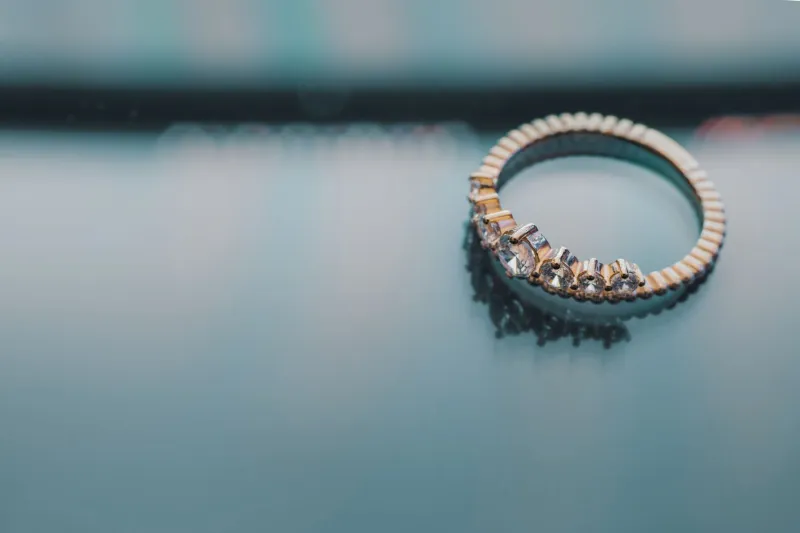
The diamond ring has been in the family for three generations. It arrived in America in 1948, worn on the hand of a woman who crossed the Atlantic with very little else. Her granddaughter has worn it on significant occasions—graduations, anniversaries, evenings that called for something that carried weight beyond its carats. Now that granddaughter is in her late sixties, and she has two daughters, each of whom loves the ring, and neither of whom has ever discussed what happens to it next.
This is not an unusual situation. It is, in fact, the norm. Despite the care and intention that affluent American families bring to financial planning, estate strategy, and wealth transfer, the conversation about specific objects—the jewelry, the watches, the silverware, the art—is frequently deferred until it can no longer be avoided. By then, grief or urgency has entered the room, and the conditions for a thoughtful discussion have long since passed.
The most generous thing a collector can do for the people she loves is to begin this conversation early, and to approach it with the same intelligence and care she has brought to every other meaningful decision in her life.
Why the Conversation Is Deferred—and Why That Is Costly
The reluctance to discuss the future of precious objects is understandable, rooted as it often is in a tangle of emotions: the discomfort of contemplating mortality, the fear of appearing to assign unequal value to different heirs, the wish not to create conflict where harmony currently exists. These are legitimate concerns. They are also, in most cases, best addressed through conversation rather than avoidance.
When the discussion is deferred until after a death, several things tend to happen simultaneously and badly. Grief distorts perspective. Time pressure forces decisions that deserve deliberation. And the absence of any expressed preference from the person who mattered most leaves heirs to navigate competing claims with no map and no authority other than their own desires—a recipe for resentment that can outlast the objects themselves.
Families who approach the inheritance of significant objects proactively, by contrast, consistently report two outcomes: the process is far less painful when the time comes, and the objects themselves carry more meaning to their recipients because they arrive with context, intention, and story intact.
Timing: When to Begin
There is no universally correct moment to initiate this conversation, but there are several circumstances that make it particularly natural. The acquisition of a significant new piece offers one opening—a moment when the collection is already under discussion and the question of its long-term future feels relevant rather than morbid. A milestone birthday, a major family gathering, or the beginning of an estate planning process with a financial advisor are equally useful prompts.
What matters more than timing is framing. The conversation should not be introduced as a discussion of death or diminishment, but as an expression of love and intention—a desire to ensure that objects of genuine beauty and meaning find their way to people who will genuinely treasure them.
"I started the conversation with my daughters when I turned sixty," says one collector based in the mid-Atlantic region who has assembled a significant collection of American studio jewelry over several decades. "I told them I wasn't going anywhere, but that I wanted them to understand what they were looking at—the history of each piece, why I chose it, what it meant to me. By the time it becomes a practical question, it will already be a story they know."
Cultivating Appreciation Before Transfer
One of the most overlooked dimensions of this process is the role of education. A piece of jewelry that arrives as an inheritance without context is simply an object, however beautiful. A piece that arrives with a fully rendered narrative—the maker's name, the occasion of its acquisition, the aesthetic principles that drew the original owner to it—is something considerably more.
Collectors who invest time in sharing this knowledge with the next generation before any transfer occurs are, in effect, passing along two things simultaneously: the object and the understanding of why it matters. This dual inheritance is far more valuable than the object alone.
Practical ways to accomplish this include maintaining a written record—what some advisors call a jewelry journal—that documents each significant piece with its provenance, acquisition story, care requirements, and any associated appraisals or certificates. Sharing this document with heirs while there is still opportunity for questions and conversation transforms it from a logistical record into something approaching a memoir.
Acknowledging That Not Every Piece Must Stay in the Family
This is perhaps the most liberating insight available to collectors navigating legacy planning: the obligation to retain every significant piece within the family is largely self-imposed, and frequently contrary to the best interests of both the objects and the people involved.
Some heirs will have no genuine affinity for fine jewelry. Some pieces will not suit the aesthetic or the lifestyle of the next generation. Some collections contain items that are more valuable—financially and emotionally—when directed elsewhere: donated to a museum, sold to a collector who will genuinely cherish them, or gifted to a close friend whose relationship with the object is more personal than any family connection.
Recognizing and accepting this reality is not a failure of legacy. It is an act of clarity. The goal of thoughtful inheritance planning is not to keep things in the family at all costs—it is to ensure that significant objects find their way to people who will honor them. Sometimes those people share your last name. Sometimes they do not.
The Conversation as Its Own Inheritance
Ultimately, the most valuable thing transmitted in these discussions is not any individual piece, however significant. It is the model of intentionality itself—the demonstration that objects can be acquired with purpose, maintained with care, and passed along with love and clarity rather than chaos and conflict.
Children and grandchildren who witness this approach learn something that cannot be purchased at any auction house or estate sale: that the relationship between a person and the objects she chooses to surround herself with is worthy of genuine thought and genuine conversation. That elegance is not merely aesthetic but ethical. That stewardship, in all its forms, is one of the most refined expressions of character available to us.
At Pink Cleef, we believe that a collection achieves its fullest meaning not at the moment of acquisition, but at the moment of transmission—when the story behind each piece is finally told to the person who will carry it forward.