Beyond the Label: Why America's Most Discerning Collectors Are Falling in Love with the Object Itself
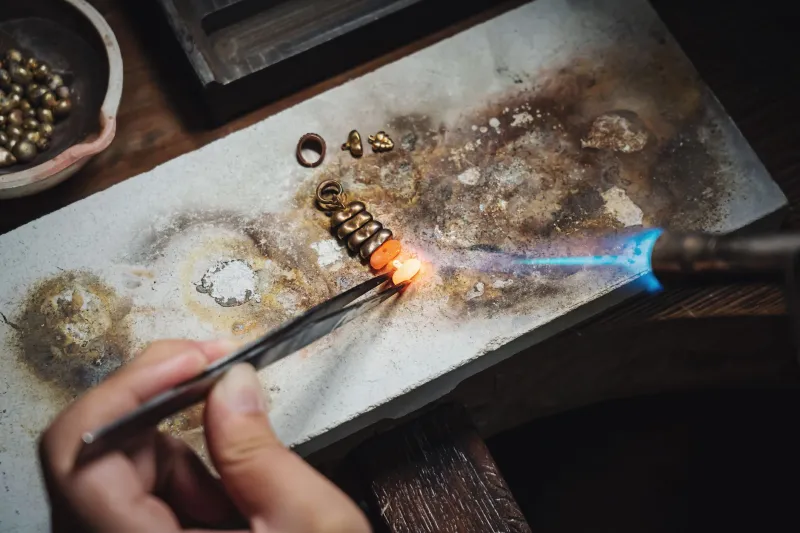
There is a particular kind of confidence required to wear something extraordinary that no one will immediately recognize. No interlocking initials. No signature clasp. No house monogram embossed along the edge. Just the work itself — the weight of the gold, the precision of the setting, the almost imperceptible texture of hand-stitched seams — speaking quietly and entirely on its own terms.
This is the new grammar of American luxury collecting, and it is reshaping the market in ways that analysts and heritage craftspeople alike are only beginning to fully appreciate.
The Erosion of the Status Symbol
For much of the late twentieth century, the logic of luxury acquisition was relatively straightforward: one purchased from a recognized house, and that house's reputation traveled with the object. A watch, a handbag, a strand of pearls — each served as a kind of portable credential, legible to those who moved in similar circles. The brand was, in many respects, the product.
That equation is quietly dissolving. Market research conducted across American high-net-worth households in recent years consistently reveals a demographic of collectors — typically aged thirty-five and above, with substantial disposable income and considerable exposure to the luxury market — who express active fatigue with conspicuous branding. They have, as one New York-based jewelry consultant described it, "graduated past the logo."
The shift is not anti-luxury. It is, if anything, a deeper form of luxury engagement — one that demands more of the collector in terms of knowledge, discernment, and patience, and rewards them accordingly.
What the Object Knows
When a collector begins to prioritize the object over the brand, they enter a different kind of relationship with their acquisitions. The questions change entirely. Rather than asking who made this? in the institutional sense, they begin asking how it was made — and by whose hands, using what tradition, in service of what ideal.
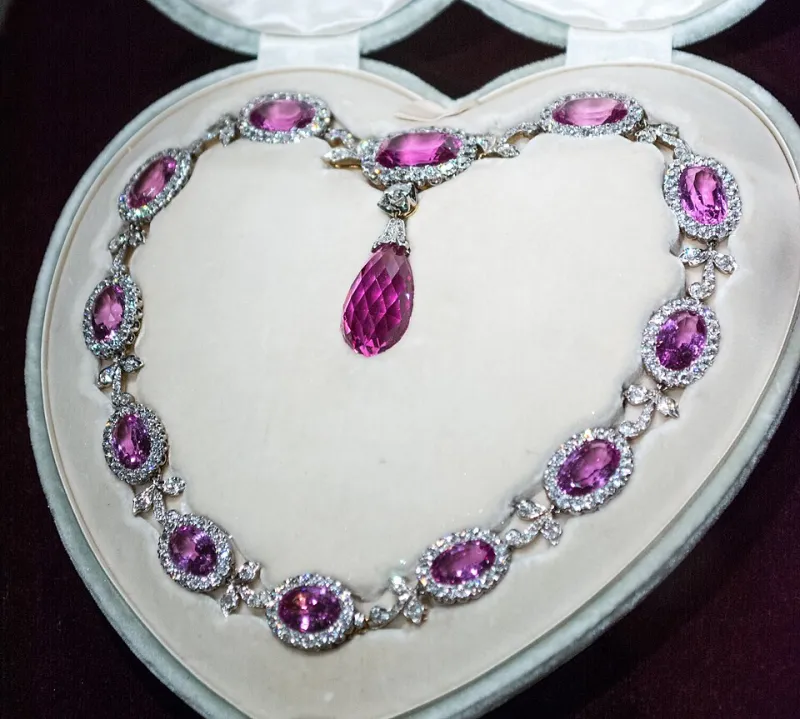
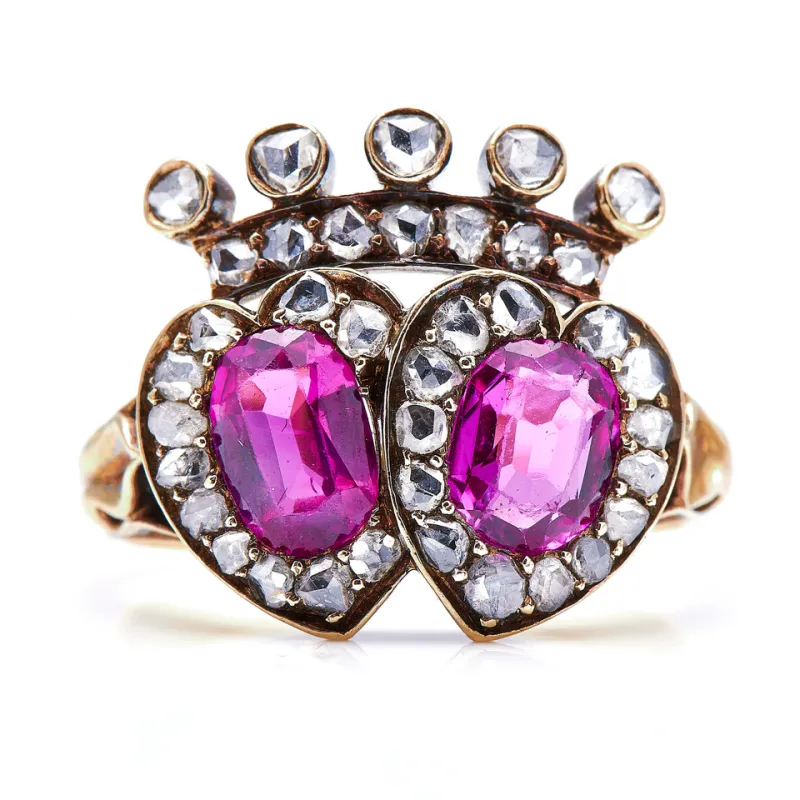
Heritage jewelers working in the Georgian and Victorian idiom, for instance, have noted a marked increase in American clientele who arrive not merely curious but genuinely educated. They want to understand the difference between closed-back and open-back settings. They ask about the provenance of a particular cut, or inquire whether a piece was likely produced for a specific social occasion. The conversation, as one Philadelphia-based estate jeweler observed, "has become scholarly in the most pleasurable sense."
This orientation toward craft knowledge is not incidental. It reflects a broader cultural appetite — visible across American collecting circles, from furniture to ceramics to textiles — for things that carry the evidence of human intelligence and skill within their very structure. A machine-finished object, however prestigious its origin, cannot offer what a hand-engraved gold locket from a nineteenth-century American workshop offers: the irreducible presence of another human being's concentrated attention.
Provenance as the New Prestige
If brand recognition once served as the primary shorthand for value, provenance has emerged as its more nuanced successor. Collectors now speak of provenance not merely in the legal or auction-house sense — the documented chain of ownership — but in a richer, more textured way that encompasses the history of a technique, a region, a material tradition.
A piece of jewelry produced by an independent artisan working in the tradition of French haute joaillerie, for example, carries a different kind of story than a piece bearing a famous house's name — even if the underlying quality is comparable or superior. The independent work demands that its owner understand and articulate its value. It cannot rely on institutional authority. In this sense, it confers a more active form of connoisseurship upon its collector.
Luxury market analysts have begun referring to this phenomenon as "earned prestige" — the idea that the most sophisticated consumers now prefer objects whose worth must be recognized rather than announced. The distinction is subtle but socially significant: one is seen, the other is merely noticed.
The Heirloom as Investment Thesis
There is also a deeply practical dimension to this philosophical shift. Collectors who have spent years acquiring branded luxury goods and then attempted to resell or pass them on have encountered the limitations of brand-dependent value. Trends shift. Houses undergo creative transitions. A bag that commanded reverence in one decade may read as dated in the next, its resale value tethered to the vicissitudes of fashion rather than to any intrinsic quality.
Contrast this with a well-made piece of antique jewelry, a hand-forged silver service, or a bespoke garment constructed from exceptional cloth by a skilled tailor. These objects do not age in the fashion sense. They accumulate age in the heirloom sense — gathering patina, character, and meaning as they pass through time and, eventually, through generations.
For collectors who think in terms of legacy rather than trend cycles, this distinction is decisive. The question they ask is not what is this worth now? but rather what will this mean in thirty years? The answer, almost invariably, favors the object of genuine craft over the object of institutional branding.
The Collector's Education
Perhaps the most striking aspect of this movement is the intellectual investment it demands. Collectors who pursue craft over credential must develop genuine expertise — in materials, in techniques, in historical context. They must build relationships with jewelers, dealers, and restorers who possess deep specialist knowledge. They must learn to trust their own eyes and hands rather than deferring entirely to a brand's authority.
This is, in the most literal sense, a more demanding form of collecting. It is also, by nearly all accounts, a more rewarding one. Collectors who have made the transition describe a qualitative change in their relationship to their objects — a sense of genuine intimacy and understanding that brand acquisition, however pleasurable, rarely produces.
The American luxury market has long been characterized by a tension between aspiration and authenticity. What the current moment suggests is that a significant and growing segment of the most discerning consumers has resolved that tension decisively in favor of the latter. They are choosing the piece over the name, the craft over the credential, the object over the emblem.
A Quieter Form of Abundance
At Pink Cleef, we have always understood luxury as something more precise than the mere accumulation of recognized names. True luxury, in our view, is the product of discernment — the capacity to recognize and honor excellence wherever it resides, whether or not a famous house has placed its imprimatur upon it.
The collectors leading this shift are not rejecting luxury. They are refining it. They are insisting that the things they bring into their lives and leave to those who follow them be worthy of the attention they require — not because a brand has declared them so, but because the work itself, examined closely and honestly, makes the case beyond any doubt.
That is a high standard. It is also, for those who hold it, an immensely satisfying one.