The Pink Diamond Imperative: Rarity, Value, and the Case for the World's Most Coveted Stone
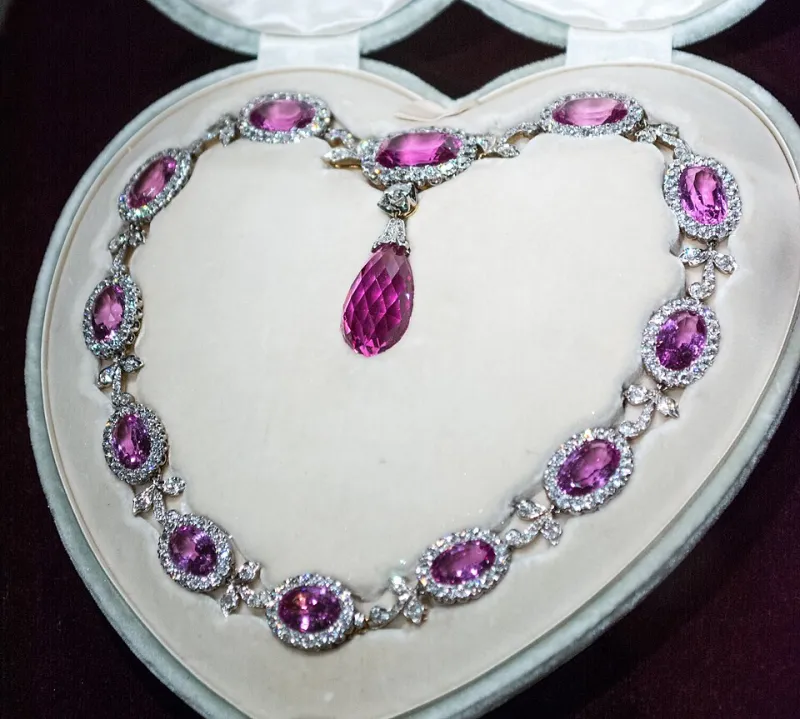
Photo: Tim Evanson from Cleveland Heights, Ohio, USA, CC BY-SA 2.0, via Wikimedia Commons
In the vast and occasionally overwhelming universe of luxury investment, few assets inspire the kind of reverent, almost reverential attention that a genuine pink diamond commands. It is not simply a gemstone. It is a geological anomaly of such profound scarcity that its very existence feels like an act of defiance against probability — and it is precisely this defiance that makes it one of the most compelling stores of value available to today's high-net-worth collector.
At Pink Cleef, where the name itself carries an echo of this extraordinary stone's essence, the pink diamond represents more than aesthetic aspiration. It represents a philosophy: that the rarest things, chosen wisely and worn with intention, transcend the moment of their acquisition and become enduring legacies.
Understanding the Source of Scarcity
To appreciate the investment case for pink diamonds, one must first understand why they are so profoundly rare. Unlike yellow or blue diamonds, whose color arises from trace chemical impurities during formation, the pink diamond's color is believed to result from a process called plastic deformation — a distortion of the crystal lattice structure caused by intense heat and pressure deep within the earth. This process is exceptionally uncommon, which is why pink diamonds account for an infinitesimally small fraction of all diamonds mined globally.
For decades, the Argyle mine in Western Australia — operated by Rio Tinto — served as the source of approximately 90 percent of the world's supply of pink diamonds, the vast majority of them in the smaller, lighter-toned range. When Argyle permanently closed its operations in November 2020, it did not merely end a chapter in mining history. It fundamentally altered the supply equation for pink diamonds in a manner that experts believe will not be reversed within any investor's foreseeable lifetime.
New pink diamond sources — in Canada, Russia, and parts of Africa — exist, but none approach Argyle's former output in either volume or the characteristic intensity of color that made Argyle stones so prized. The supply side of the market, in practical terms, has contracted permanently.
Market Trends: A Record of Appreciation
The financial performance of investment-grade pink diamonds over the past two decades has been, by almost any measure, remarkable. According to data from the Pink Diamond Index and various auction house records, top-quality fancy vivid pink diamonds have appreciated at an average annual rate that consistently outpaces inflation and, in many periods, rivals or exceeds equity market returns — while carrying a correlation to traditional financial markets that approaches zero.
The auction record for a pink diamond was set in 2017, when the CTF Pink Star — a 59.60-carat oval mixed-cut fancy vivid pink — sold at Sotheby's Hong Kong for approximately $71.2 million, setting a per-carat record that remains among the highest ever achieved at public sale for any gemstone. More recently, Sotheby's New York and Christie's have continued to see strong bidding for high-quality pink diamonds, with even smaller stones of exceptional color and clarity commanding prices that would have seemed extraordinary a generation ago.
For American collectors, who operate within a domestic market that has historically shown strong appetite for trophy assets — from Manhattan real estate to blue-chip contemporary art — pink diamonds represent a portable, private, and internationally recognized store of value that carries none of the management burden of real property and none of the volatility of publicly traded securities.
The Language of Grading and Authentication
For any investor approaching the pink diamond market, fluency in the language of gemological grading is not optional — it is essential. The Gemological Institute of America (GIA), headquartered in Carlsbad, California, is the globally recognized authority on diamond grading, and a GIA report accompanying any pink diamond of investment significance is a non-negotiable prerequisite.
The GIA grades fancy color diamonds along a scale from Faint to Fancy Vivid, with Fancy Vivid representing the most saturated, commercially desirable, and financially valuable designation. Within the pink family, color modifiers — such as purplish pink, orangy pink, or brownish pink — affect value significantly. A pure Fancy Vivid Pink, without secondary color modifiers, commands a substantial premium over a stone of similar size with a brownish or orangy secondary hue.
Clarity, cut, and carat weight all contribute to value in the manner familiar to any diamond buyer, but in the world of pink diamonds, color reigns supreme. A well-saturated Fancy Intense Pink of modest clarity will frequently outvalue a larger, cleaner stone of lesser color intensity. Investors who do not yet have this framework internalized are strongly advised to engage a qualified independent gemological consultant before any significant acquisition.
Wearable Art as Financial Strategy
One of the most seductive aspects of the pink diamond as an investment vehicle is its dual identity: it is simultaneously a financial asset and an object of extraordinary beauty. Unlike a stock certificate or a bond, a pink diamond ring can be worn to a gala, admired at dinner, and passed to a daughter or granddaughter as an heirloom of both sentimental and material significance.
This duality is not incidental. For many collectors in the upper tiers of the luxury market, the ability to derive daily aesthetic pleasure from an appreciating asset is a meaningful component of the overall value proposition. A Fancy Vivid Pink diamond set in a bespoke platinum mounting by a storied American or European jeweler is, in the truest sense, wearable art — and it is art that, historically, has grown more valuable over time.
The Pink Cleef brand identity is, at its heart, an expression of this same philosophy: that beauty and value are not opposing forces, but complementary ones. The pink diamond, rare beyond almost any other luxury asset, embodies this truth more completely than perhaps any other object in the collector's universe.
Building a Pink Diamond Position Thoughtfully
For those considering their first foray into pink diamond acquisition, the counsel of seasoned collectors and reputable dealers is consistent: begin with quality over size. A smaller stone of exceptional color and GIA-certified Fancy Vivid or Fancy Intense designation will serve the long-term collector far better than a larger stone of mediocre hue.
Provenance matters. Stones with documented Argyle provenance — particularly those accompanied by Argyle's own pink diamond tender certificates — carry an additional premium in today's market that is only expected to grow as post-closure awareness deepens among buyers globally.
And finally, patience. The pink diamond is not a liquid asset in the manner of a publicly traded security. It rewards those who approach it with the long view — those who understand that the rarest things, held with conviction and care, have a way of vindicating the discernment of those who recognized their worth early.
In that sense, the pink diamond is not merely an investment. It is a statement of values.