The Rose Horizon: Why Pink Diamonds and Sapphires Are Redefining Gemstone Investment in 2024
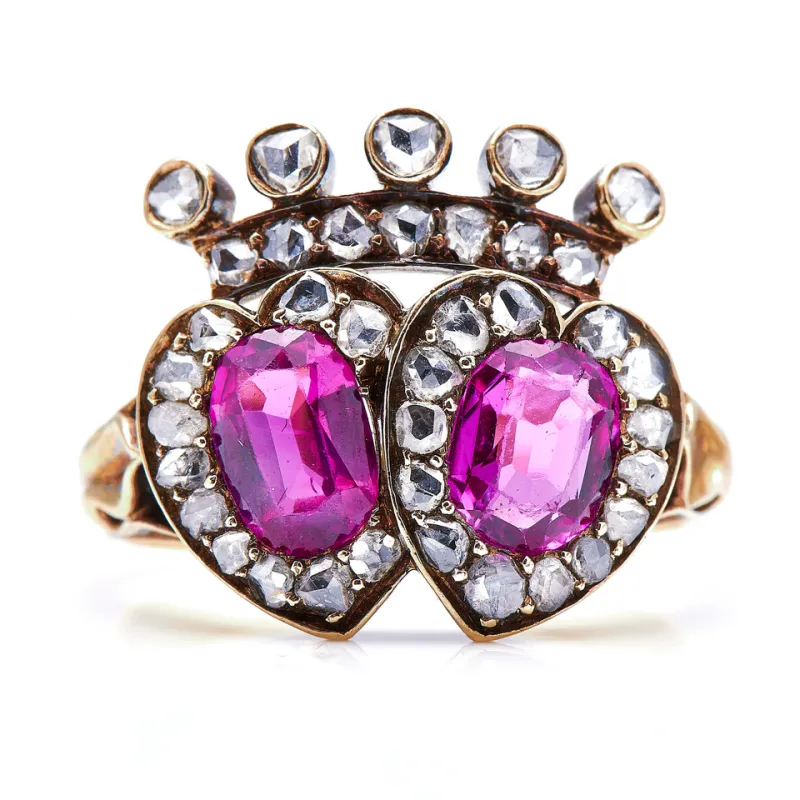
Photo: Samuel Mee, CC BY-SA 4.0, via Wikimedia Commons
In October 2023, a 14.83-carat fancy vivid pink diamond sold at Sotheby's Geneva for just over $35 million — a figure that would have seemed improbable a decade ago, and one that sent an unmistakable signal to the global collector community. Pink, in the world of fine gemstones, is no longer a secondary color. It is, increasingly, the primary story.
Across the United States, a growing cohort of high-net-worth collectors, jewelry connoisseurs, and wealth managers are training their attention on pink gemstones with a seriousness of purpose that reflects both aesthetic appreciation and calculated financial strategy. The convergence of extreme scarcity, intensifying global demand, and the emotional resonance that these stones carry has created market conditions unlike anything previously observed in the colored gemstone sector.
The Rarity Equation: Why Supply Has Fundamentally Changed
To understand the investment case for pink diamonds specifically, one must begin with a fact that is both simple and staggering: the Argyle mine in Western Australia, which produced approximately 90 percent of the world's supply of pink diamonds, closed permanently in November 2020. Rio Tinto, its operator, had extracted what the deposit had to offer. There will be no comparable source.
The implications of this closure are not theoretical — they are already being reflected in market prices. Pink diamonds that might have traded at a premium of four to six times the equivalent colorless stone a decade ago are now commanding multiples that have surprised even seasoned dealers. "We are in genuinely uncharted territory," notes one New York-based gemologist who has specialized in colored diamonds for more than two decades. "The Argyle closure didn't just reduce supply — it effectively capped it. Every fine pink diamond in existence is now a finite resource in the most literal sense."
For collectors who acquired Argyle-certified pink diamonds prior to the mine's closure, the financial trajectory has been gratifying. For those entering the market now, the entry point is considerably higher — but the underlying scarcity argument remains, if anything, more compelling than ever.
Pink Sapphires: The Accessible Frontier
For collectors whose appetite for pink gemstones exceeds their budget for diamonds, pink sapphires present a compelling alternative — and one that is increasingly recognized as a category of genuine investment merit in its own right.
Sourced primarily from Sri Lanka, Madagascar, and Myanmar, fine pink sapphires occupy a fascinating position in the gemstone hierarchy. They share corundum's exceptional hardness (9 on the Mohs scale, second only to diamond), making them eminently suitable for daily wear. At their finest — a saturated, even, vivid pink with minimal secondary hues — they possess a visual intensity that many collectors find more immediately arresting than all but the most exceptional pink diamonds.
The market for pink sapphires has matured considerably over the past five years. Where collectors once viewed them primarily as a budget-conscious substitute for pink diamonds, the conversation has shifted. "Pink sapphires are now being collected on their own terms," observes a gemstone specialist at a prominent American auction house. "A truly exceptional unheated Sri Lankan pink sapphire of five carats or more is a genuinely rare object. The market is beginning to price it accordingly."
The word unheated is critical in this context. Heat treatment — the process of exposing rough sapphires to extreme temperatures to improve color and clarity — is ubiquitous in the industry and generally accepted as a standard practice. However, stones that achieve their color naturally, without any thermal enhancement, command a significant premium and are far more likely to retain and appreciate in value over time.
Authentication: The Central Challenge
The growing financial significance of pink gemstones has, predictably, intensified scrutiny around authentication and disclosure. For collectors entering this market, understanding the certification landscape is not merely advisable — it is essential.
The Gemological Institute of America (GIA) is widely regarded as the gold standard for diamond grading in the United States, and its colored stone reports provide critical information about treatment status, color origin, and quality characteristics. For pink sapphires, the GIA report should be examined in conjunction with assessments from other respected laboratories, including the Swiss Gemmological Institute (SSEF) and Gübelin Gem Lab, both of which maintain particular authority in the colored stone sector.
Beyond laboratory certification, provenance documentation — evidence of a stone's history of ownership and, where possible, its geographic origin — adds meaningful value. An Argyle-certified pink diamond accompanied by original mine documentation occupies a different tier of the market than a comparable stone whose provenance is uncertain.
Collectors are also advised to engage independent gemological counsel before making significant acquisitions. The complexity of the colored gemstone market — where subtle distinctions in hue, saturation, and treatment status can translate into price differences of hundreds of thousands of dollars — demands expertise that extends beyond the capabilities of even a highly knowledgeable enthusiast.
Notable Acquisitions and Market Benchmarks
The auction record for a pink diamond — set by the 59.60-carat Pink Star, which achieved $71.2 million at Sotheby's Hong Kong in 2017 — remains one of the most cited benchmarks in the gemstone investment world. But it is the performance of smaller, more accessible stones at the $500,000 to $5 million level that most directly informs the decisions of American collectors.
At this tier, the market has demonstrated consistent strength. Fine fancy intense and fancy vivid pink diamonds in the one-to-five-carat range have appreciated meaningfully over the past decade, with post-Argyle closure momentum adding further impetus. The collector who acquired a well-certified two-carat fancy vivid pink diamond in 2015 has, in most cases, seen returns that compare favorably with conventional asset classes.
Pink sapphires at the investment grade — unheated, five carats and above, with GIA or equivalent certification — have similarly outperformed expectations, with particularly strong demand from collectors in New York, Los Angeles, and Miami.
Wearing Your Investment
Perhaps the most singular quality of pink gemstone investment — and the characteristic that distinguishes it most sharply from purely financial assets — is the pleasure of ownership. A pink diamond of exceptional quality, set by a master jeweler, is not merely a store of value. It is an object of profound beauty, capable of being worn, admired, and eventually passed to the next generation.
This wearability is not incidental to the investment case — it is central to it. The collector who acquires a fine pink sapphire ring is not merely purchasing an asset. She is acquiring a piece of wearable history: a stone formed over millions of years, extracted with considerable difficulty, and set with extraordinary craft. That the object may also appreciate in financial value is, in this light, almost secondary to the deeper satisfaction it provides.
For the discerning collector, this convergence of beauty, rarity, and enduring value is precisely the definition of a worthy acquisition.