Worn Beautifully: The New Luxury of Patina, Repair, and Earned Imperfection
For decades, the aspiration in luxury was immaculate. Unworn. Box-fresh. The handbag that had never touched a sidewalk, the watch with a crystal unmarked by a single graze, the silk blouse preserved in its original tissue — these were the signifiers of arrival. Newness, in the luxury imagination, was synonymous with worth.
Something has shifted. Among the collectors who set the terms of sophisticated taste in America today, the calculus has reversed. A Horween leather briefcase bearing the scuffs of a decade's travel now commands more admiration than its pristine counterpart. A Georgian silver bracelet darkened with age, a vintage Chanel jacket with a replaced button in slightly mismatched thread, a pair of handmade shoes resoled three times over — these are the objects that provoke genuine conversation. They carry what no amount of money can simply purchase: evidence of a life genuinely inhabited.
From Pristine to Storied: A Cultural Reckoning
The shift is partly philosophical and partly generational, though it cuts across both. A younger cohort of wealthy American collectors, many of them inheritors of family legacies as much as personal fortunes, has grown skeptical of the performance of newness. They have watched their parents accumulate and have drawn different conclusions about what accumulation means.
At the same time, a broader cultural conversation about sustainability and authenticity has reached even the most rarefied corners of the market. The piece that has been worn, repaired, and worn again represents a kind of integrity that the untouched object cannot. It demonstrates commitment — to a maker, to a craft, to the idea that beautiful things deserve to be used rather than preserved behind glass.
This is not, it should be said, an endorsement of carelessness. The distinction that separates the collector's patina from simple neglect is intentionality. The scuffed leather bag that has been regularly conditioned and properly stored speaks differently than one that has merely been forgotten in a closet. The darkened silver ring that has been periodically polished around its details, allowing the oxidation to settle into its engraving, tells a story of active stewardship. Earned imperfection is curated imperfection.
What the Marks Actually Say
Among those fluent in the language of fine objects, visible wear functions as a form of biography. The crease lines on a well-made leather glove map the particular shape of the hand that has worn it. The gentle dent in the crown of a vintage felt hat suggests decades of being set down on the same shelf. The replaced clasp on an antique necklace, executed in a slightly different metal, is evidence of a repair made because the piece was loved enough to save.
Japanese aesthetics have long articulated this sensibility through the concept of wabi-sabi — the beauty found in impermanence and imperfection — and through kintsugi, the practice of repairing broken ceramics with gold so that the repair becomes part of the object's beauty. American collectors, historically less comfortable with visible age, are arriving at a comparable understanding through a different route: the growing recognition that provenance is not merely about where something came from, but about everything that has happened to it since.
A bespoke suit with a replaced button, a cashmere coat with a professionally rewoven moth hole, a pair of boots with a new welt — these repairs, executed with care, add to an object's narrative rather than subtracting from it. They are evidence of a relationship between owner and object that transcends the transactional.
How Luxury Brands Are Responding
The industry has taken notice. Several heritage houses have expanded or formalized their repair and restoration programs, recognizing that a client who brings a twenty-year-old bag in for reconditioning is demonstrating precisely the kind of loyalty that defines the brand relationship at its deepest. Hermès has long maintained its petit h atelier, which transforms damaged or surplus materials into new objects, celebrating the beauty of imperfection at the highest level of craft.
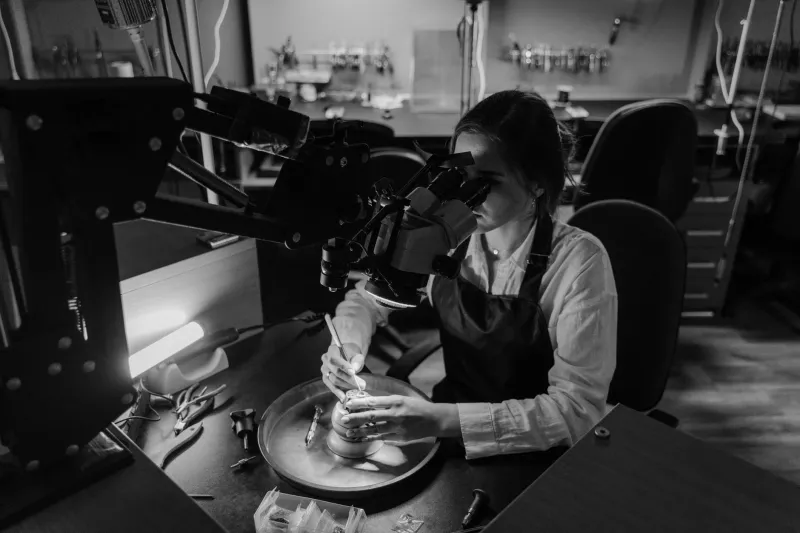
In American fine jewelry, a parallel movement is emerging. Jewelers who offer re-tipping, re-shanking, and stone resetting are finding that clients increasingly want these repairs to be visible — or at least, not aggressively concealed. A ring worn thin over thirty years of daily wear, its band re-shanked to restore structural integrity, is understood by its wearer as a more meaningful object than a replacement would ever be.
Some independent American designers are going further, building the language of age directly into new work. Deliberately oxidized silver, intentionally brushed gold, leatherwork treated to develop a rapid patina — these are not shortcuts but aesthetic commitments, an acknowledgment that the most beautiful state of a luxury object is rarely its newest.
The Collector's Confidence
Underlying all of this is a particular kind of confidence — the confidence of someone who does not need their possessions to appear new in order to feel secure in their taste. The collector who carries a bag with thirty years of wear, or who wears a ring that has been resized twice and repaired once, is making an implicit statement: I know what this is. I know what it has been through. I do not need to perform newness because I am not performing anything at all.
This is, perhaps, the most refined form of luxury expression available: the freedom from the anxiety of preservation. The willingness to use beautiful things, to allow them to accumulate the evidence of use, and to find in that accumulation not loss but depth. The pristine object tells you what something is worth. The worn one tells you what it has meant.