The Art of Speaking Softly: How Discretion Became the Defining Luxury of Our Moment

There is a particular kind of confidence that requires no audience. It does not seek validation from a passing glance or the recognition of a monogram. It exists entirely on its own terms — felt by the wearer, understood only by those who know precisely where to look. In the most rarified corners of American luxury today, this quality has a name, though its practitioners rarely use it. They simply call it taste.
The cultural moment we are living through represents something genuinely unprecedented in the history of American consumption. For decades, luxury was defined by its legibility — the interlocking initials, the signature hardware, the instantly recognizable silhouette that broadcast its own price point across a crowded room. That era, many would argue, has quietly drawn to a close.
The Psychological Architecture of Quiet Luxury
To understand why ultra-high-net-worth Americans have turned away from visible signaling, one must first understand what visible signaling was always attempting to accomplish. Conspicuous consumption, as Thorstein Veblen famously theorized over a century ago, served as social communication — a declaration of arrival, of belonging, of distance from scarcity. For those who had recently ascended the economic ladder, visible luxury offered a kind of shorthand.
But for individuals who have inhabited wealth across generations, or whose financial security is so thoroughly established that it requires no external confirmation, that shorthand becomes unnecessary. Worse, it becomes a liability. Style consultants working with clients in Manhattan, Palm Beach, and San Francisco's Pacific Heights neighborhoods report a near-universal sentiment among their most accomplished clients: the logo, once a trophy, now reads as insecurity.
"The clients I work with at the highest level are not interested in being recognized for what they're wearing," says one senior style advisor whose clientele includes board members and institutional philanthropists. "They want to feel extraordinary. That is an entirely internal experience. The garment serves the wearer, not the observer."
Where Quality Lives When It Has Nothing to Prove
The practical expression of this philosophy manifests in choices that reward intimacy and close attention. A cashmere overcoat in a tone so precisely calibrated it appears almost neutral, until the light shifts and reveals an extraordinary depth of color. A leather handbag with no external branding whatsoever, its quality communicated entirely through the weight of the strap, the precision of the stitching, the way it holds its shape after years of use.
Heritage American brands — and their European counterparts with serious American clientele — have responded with notable agility. Several major houses have quietly introduced what industry insiders refer to as "de-branded" lines: pieces constructed to the same exacting standards as their logo-bearing counterparts, but stripped of any external identification. These collections frequently command a premium. The absence of the logo, it turns out, costs more than its presence.
This is not minimalism for its own sake. The distinction matters enormously to those who practice it. True stealth wealth is not about the removal of ornament — it is about the elevation of substance. A plain white shirt that costs four hundred dollars and a plain white shirt that costs forty dollars may appear identical in a photograph. They do not feel identical to the person wearing them, nor do they age the same way, nor do they carry the same quiet authority in a room.
The New Codes of Recognition
If luxury no longer announces itself, how does it communicate? The answer lies in what might be called the new fluency — a set of references and recognitions available only to those who have invested the time, attention, and resources to acquire them.
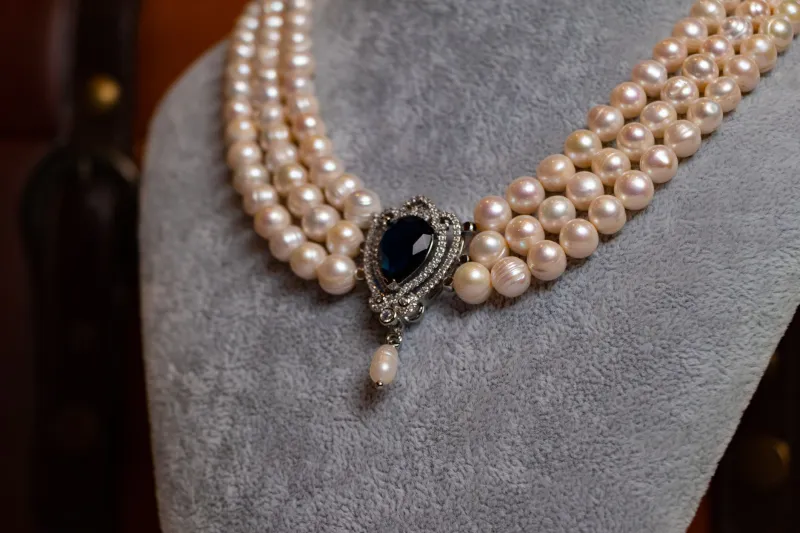
Fabric weight. The particular drape of a well-cut trouser. The provenance of a stone set without fanfare into a simple gold band. These are the new passwords, and they are deliberately inaccessible to those who have not earned the vocabulary. In this sense, stealth wealth is not merely modest — it is, paradoxically, more exclusive than the logo it replaced. Anyone can purchase a recognizable monogram. Not everyone can identify a hand-rolled hem or a naturally occurring inclusion in a responsibly sourced sapphire.
"There is a kind of pleasure in being understood only by the right people," observes a collector and longtime Pink Cleef reader based in Connecticut, who asked to remain anonymous. "When someone notices the quality of a piece I'm wearing without being able to name it or price it — that is the recognition I value. It means they have the same relationship to objects that I do."
Curating the Invisible Collection
For those building a wardrobe or jewelry collection according to these principles, the practical implications are significant. Investment shifts away from seasonal trend pieces and toward objects with genuine longevity — not merely in terms of physical durability, but in terms of cultural staying power. The question is no longer "Will people know this is expensive?" but rather "Will this still be extraordinary in thirty years?"
This reorientation demands a different kind of shopping entirely. It requires slowing down, asking harder questions, and resisting the satisfaction of immediate recognition. It requires, in short, the same qualities that define the pieces themselves: patience, discernment, and an absolute indifference to external approval.
The whisper, it turns out, carries further than the shout. It simply requires a more attentive listener — and that, for the truly discerning, is precisely the point.