Every Clasp Tells a Story: Reading the Autobiography Written in Jewelry

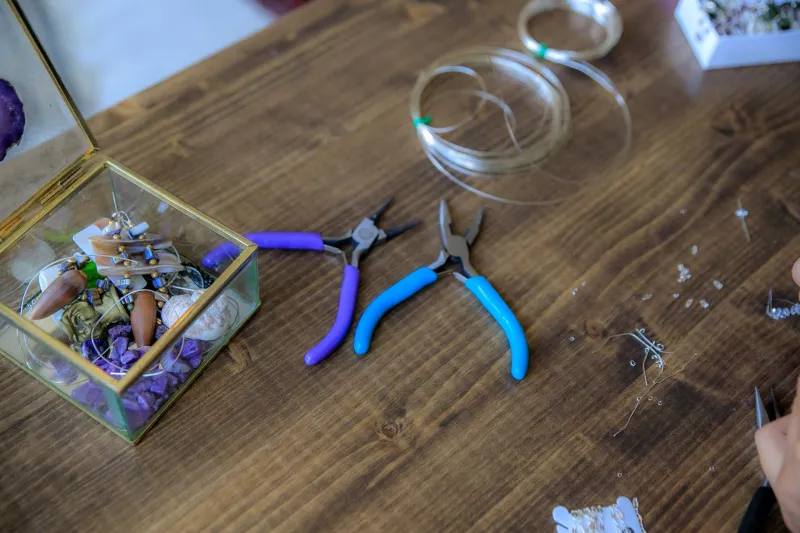
Photo by Photo by COPPERTIST WU on Unsplash on Unsplash
Open the jewelry box of a woman who has lived fully, and you will find something no biography could replicate. Not a chronology, exactly, and not a catalog — but an emotional map. A terrain of accumulated meaning, laid out in gold and stone, each piece occupying its own particular geography of memory, identity, and becoming.
The ring worn on the wrong finger because the right one no longer feels correct. The bracelet that belonged to a grandmother and carries the faint impression of another woman's wrist. The piece purchased alone, in a foreign city, on the afternoon everything changed. These objects do not merely accompany a life. In some essential way, they record it.
The Geography of What We Keep
Jewelry collectors — serious ones, the kind who acquire slowly and with genuine feeling — speak of their pieces in spatial terms almost without realizing it. This necklace lives near the front. That ring has been moved to the back. This earring, once worn constantly, now rests in its own compartment, untouched but not forgotten.
The physical arrangement of a collection is itself a form of autobiography. What we keep closest to hand is what we reach for most readily — and what we reach for most readily is what feels most like us, in this particular chapter.
"I can look at any piece in my collection and tell you exactly who I was when I acquired it," says a collector based in Boston who has spent thirty years building what she describes as a deeply personal archive of fine jewelry. "Not just where I was, but who. The woman who bought that sapphire pendant was someone I remember with great tenderness. I've grown past her, but I'm glad she exists in that piece."
This is the particular gift of jewelry over other luxury objects: it is worn on the body, close to the skin, and that intimacy leaves a residue of association that no other category of possession quite replicates. A dress may evoke a memory. A piece of jewelry becomes one.
The Pieces We Have Outgrown
Any honest accounting of a jewelry collection must reckon with the pieces that no longer fit — not in a physical sense, but in a deeper one. The style purchased during a period of seeking, when one had not yet developed the confidence of a true point of view. The gift accepted graciously but never quite absorbed into one's sense of self. The trend acquisition that seemed right for a season and now seems to belong to a stranger.
Refined collectors speak of these pieces without embarrassment. They are part of the autobiography too — perhaps the most instructive chapters.
"Editing is where you learn the most about yourself," observes a Chicago-based collector who has been acquiring and releasing pieces for two decades. "The things you can let go of tell you as much as the things you can't. When I released a particular diamond tennis bracelet — a beautiful piece, objectively — I understood something about myself that I hadn't been able to articulate before. I don't wear things that feel borrowed. I only wear things that feel found."
The distinction she draws — between the borrowed and the found — is one that resonates throughout the community of serious collectors. Found pieces are those that seem to have been waiting: that feel immediately, inexplicably personal. Borrowed pieces are those we try on in good faith and ultimately return to the shelf of someone else's aesthetic.
Inheritance, Interruption, and Continuity
Some of the most emotionally complex pieces in any collection are those that arrived not through acquisition but through inheritance — objects that carry the weight of another life alongside one's own. A grandmother's brooch. A mother's engagement ring, reset or worn as-is. A piece purchased by someone no longer present, now carried forward.
These inherited objects occupy a singular position in the emotional cartography of a collection. They are not entirely one's own, and yet they have become so through the act of wearing, of choosing to integrate them, of allowing their history to braid with one's personal narrative.
"I wear my mother's pearl earrings on the days I need to feel held," says a New York collector who lost her mother several years ago. "I don't think of them as hers anymore, exactly. They've become something shared. That feels right."
The jewelry box, in this sense, is never a solitary document. It is a correspondence — between the woman who owns it and the women who came before her, between who she was and who she is becoming.
The Unwritten Memoir
What makes jewelry autobiography unique is precisely its resistance to revision. A diary can be edited, a photograph discarded. But the pieces we have held close, the ones that have accompanied us through the genuinely significant passages of our lives, carry their meaning indelibly. We may reinterpret them, but we cannot erase them.
This is why the most discerning collectors approach acquisition with such deliberateness. They understand — whether consciously or intuitively — that they are not merely purchasing an object. They are adding a sentence to a story that will outlast them, a story that will one day be read by someone who loved them, trying to understand who they were.
The jewelry box, opened carefully, is the most intimate archive any of us will ever leave behind.